Halloween Pet Safety: Candy, Costumes, Doorbells & Escape Risks
Halloween is fun for people but it hands your pet an unusual mix of hazards at once: strange food in the house, the front door opening all evening, costumes, noise, and decorations that were not there yesterday. The good news is that almost all of it can be prevented with a short setup before trick-or-treating begins.
Lock up the candy before the doorbell starts
Chocolate can be dangerous to both dogs and cats, and the darker the chocolate the more serious it is — baking chocolate and dark chocolate are the ones to worry about most. Cats are generally less interested in sweets, but they are not immune.
Sugar-free candy and gum deserve their own warning: many contain xylitol, which may also appear on labels as birch sugar or wood sugar. It is especially dangerous to dogs, even in small amounts.
- Store candy bags, wrappers, and any kids' stashes somewhere physically inaccessible — a high cabinet behind a closed door, not a low table or an open bowl by the door.
- Remind children that candy left in bedrooms, backpacks, or pockets still counts as reachable for a determined dog.
- If you suspect your pet has eaten something it should not have, contact your veterinarian or an emergency animal clinic promptly — and have the package or ingredient label with you. Do not try to make your pet vomit on your own; that is a call for a veterinary professional.
The front door is the biggest escape zone
A steady stream of visitors — many in masks and costumes, which look strange to animals — stresses some pets and excites others, and either reaction can end with a bolting dog or cat on a dark street. Halloween is one of the busiest nights of the year for lost pets.
- Set up a quiet room away from the front door before the first knock, and keep your pet there through peak trick-or-treating hours.
- A baby gate, a closed interior door, or a crate or pen your pet already likes all work — use whatever setup your pet is most comfortable with.
- If your pet will be near the action, keep them on a leash and manage greetings yourself.
- Before Halloween night, check that your pet's collar ID tag and microchip contact details are current — a five-minute check that matters most on this night of all nights.
- If your pet goes outside after dark, use a secure leash and reflective or visible gear so drivers and other pedestrians can see you both.
Costumes are optional, comfort is not
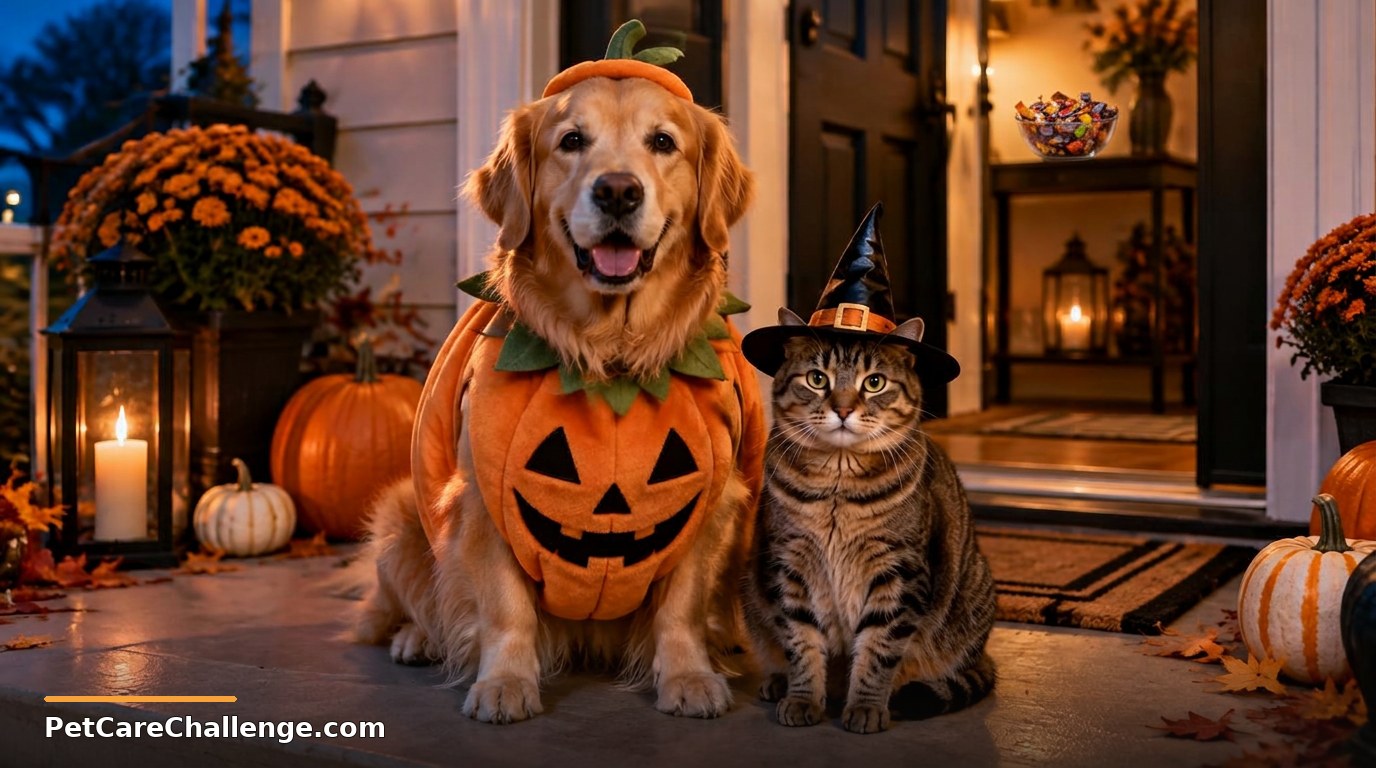
Some pets genuinely do not mind a costume; many tolerate it; a few hate it. Only dress your pet if they are clearly comfortable, and let a festive bandana be the answer for everyone else — it reads as seasonal without restricting anything.
- A costume must not restrict movement, sight, breathing, or your pet's ability to bark, meow, or use the bathroom.
- Remove or skip any dangling or small chewable parts — buttons, dangling legs, glitter, or pieces a pet could bite off and swallow.
- Do a test fit days before Halloween, not for the first time on the night. Watch how your pet moves, sits, and settles in it, and take it off at any sign of distress.
Decorations create quiet hazards
- Keep candle-lit pumpkins and any open flames well out of reach — a wagging tail or curious paw can knock one over in a second.
- Secure electrical cords and wires so pets cannot chew or tangle themselves in them.
- Keep small costume accessories, glow-stick pieces, candy wrappers, and string or ribbon-like decorations away from pets. String-like objects are especially risky if swallowed.
- Do a quick pass at your pet's eye level: if it dangles, sparkles, glows, or can be chewed, assume it will be.
The 10-minute before-dark checklist
Run through this once before trick-or-treating starts and you have covered the biggest risks of the night:
- Candy secured high or behind a closed door.
- Your pet's safe room prepared with water, a bed, and a familiar toy or food puzzle.
- A front-door barrier decided — gate, closed door, or crate.
- Collar and ID checked, microchip details confirmed.
- Your vet's number and the nearest emergency clinic saved in your phone.
- Decorations and cords checked at pet level.
- A walk and toilet break done before the crowds peak, where practical.
If something goes wrong
For a suspected toxic ingestion, trouble breathing, collapse, repeated seizures, or severe distress, contact your veterinarian or the nearest emergency animal clinic immediately rather than waiting to see if things improve.
Bring the packaging, or photograph the ingredient label, whenever your pet got into food, candy, or a product — it helps the clinic act faster.
This article is general prevention guidance for healthy pets. Your pet's veterinarian knows your animal and always takes precedence.
A closed candy stash, a calm room away from the door, current ID, and a five-minute decoration check prevent most Halloween trouble before it starts.
Sources & further reading
General guidance for healthy pets — your vet knows your animal and always takes precedence.