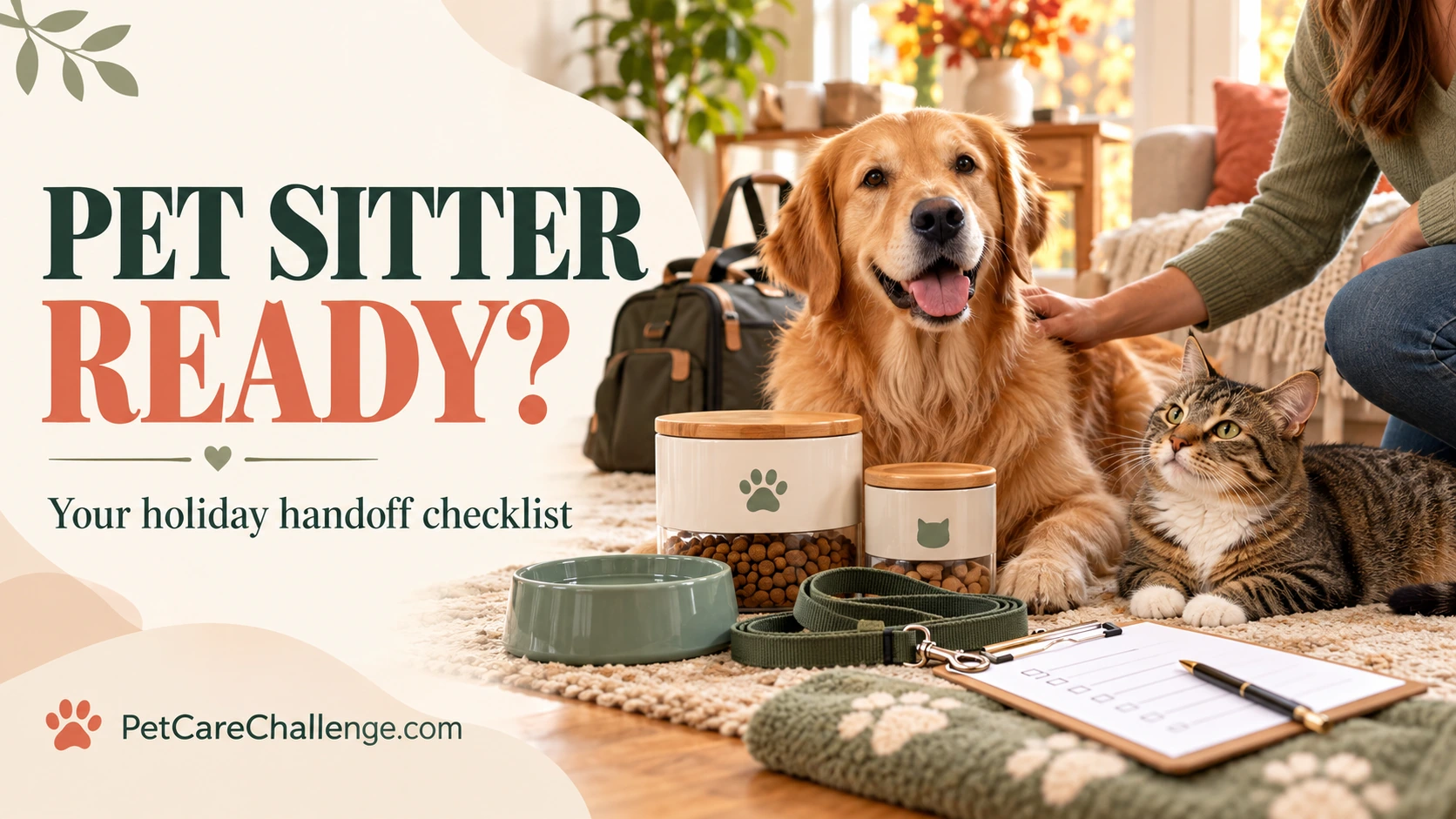
Holiday Pet Sitter Checklist: What to Leave Before You Travel
Before you travel, leave your pet sitter one clear care note, enough labeled supplies, agreed visit times and an emergency contact plan. Walk through it together before you leave. The goal is simple: your pet gets a familiar routine, and your sitter does not have to guess where things are or what to do next.
Write down the feeding routine
Write each pet's name, food, measured portion and usual meal times. Include where bowls belong, how you refresh water and any treats you allow. In a multi-pet home, explain who eats separately and how you keep one pet from finishing another's dinner.
Stick with the routine your pet already follows rather than introducing a new food for the trip. AKC recommends written feeding and medication instructions. If medication is part of care, leave the veterinarian's instructions and original labeled packaging; ask your vet about anything unclear before the handoff. Your sitter should not have to decide a dose.
Need to organize mealtimes? Read our dog feeding schedule guide.
Put supplies where the sitter can find them
Set up one easy-to-find care area. Label containers by pet, and show the sitter the measuring scoop rather than writing only 'one scoop.' AKC also recommends having adequate supplies ready. Allow for a delayed return, and explain who can help if something runs out.
- Food, approved treats, bowls and any preparation instructions.
- Leash, harness, carrier, waste bags or litter and scoop.
- Cleaning supplies, spare bedding and familiar safe toys.
Agree on visits and updates, not just dates
Confirm the first and last visit, each arrival window, and what every visit includes: meals, water, toilet breaks, litter care, walks or company. Choose care that fits your individual pet's needs; a casual drop-in arrangement is not automatically right for every animal.
Agree on one update channel and what you want to hear. A short message about eating, toileting and how your pet settled may be enough. Decide what happens if the sitter is delayed or you cannot answer. Put your return plans in writing, including who confirms that you are home.
Practice the access handoff and flag escape triggers
Have your sitter test the agreed entry method while you are there. Show how doors latch, which gates stay closed and where your pet should wait during entry. Share keys, access codes and sensitive care notes privately with your chosen sitter, never in a public comment, quiz response or shared public checklist.
Be candid about temperament: hiding from strangers, guarding food, slipping through doors or reacting to other dogs. ASPCA's sitter safety guidance supports preparing the sitter for your pet's needs. Arrange a calm introduction and explain what helps. Do not ask a sitter to handle behavior they are uncomfortable managing.
Make the emergency plan usable
Leave your number, a reachable backup person, your regular veterinarian and an emergency clinic. Confirm the backup has agreed to help. AAHA emphasizes clear emergency instructions; tell the sitter whom to call and how to arrange transport if your pet needs veterinary care.
AKC recommends a veterinary authorization plan. Ask your clinic what authorization and payment arrangements it needs before you travel. Share necessary records privately, not on a public page. Any treatment instructions must come from your pet's veterinarian; this checklist does not replace veterinary advice.
Use our vet visit checklist to prepare questions for your clinic.
A care note you can fill in
Copy this into a private note and complete it with your sitter. The blanks are intentional; use your pet's actual routine, not someone else's example.
- Pet name and usual temperament: ____. Helpful settling routine: ____.
- Food and measured portion: ____. Meal times: ____. Water routine: ____.
- Visits and agreed tasks: ____. Update channel and timing: ____.
- Supplies location: ____. Door or escape triggers: ____.
- Owner and backup contacts: ____. Vet and emergency clinic: ____.
- Vet-provided instructions and authorization location: ____. Access details: shared privately.
Should I leave a printed note too?
Yes, a copy beside the supplies is useful if a phone loses power. Keep sensitive access information separate and secure.
What if my travel plans change?
Tell the sitter promptly, confirm extra visits and supplies, and get their agreement. Do not assume they can extend the booking.
What if my pet needs medication?
Arrange care with someone able to follow your veterinarian's written instructions. Ask the vet how the sitter should handle missed or refused medication.
Leave a clear routine, do the handoff together and agree on backup help. Before you go, try the free 60-second Pet Care Challenge below for a quick check of everyday pet-care knowledge.
Sources & further reading
General guidance for healthy pets — your vet knows your animal and always takes precedence.